
Hair thinning can happen for many reasons, including age, genetics, hormonal changes, or medical conditions. For some people, thinning is most noticeable around the crown, part, or top of the head, while the rest of their hair remains relatively full.
If you are experiencing this type of hair loss, you may not need a full wig to achieve the coverage you want. Hair toppers offer another option for adding fullness and creating a more natural-looking hairstyle without covering your entire head.
Understanding how toppers work, who they are best suited for, and what options are available can help you decide whether one is right for you.
What Is a Hair Topper?
A hair topper is a hairpiece designed to provide coverage and volume in specific areas of the head, particularly around the crown or part line. Unlike a full wig, which covers the entire scalp, a topper blends with your existing hair to create a fuller appearance.
Most toppers attach to your natural hair using small clips or other securing methods. They come in different sizes, lengths, colors, and materials, allowing you to choose an option that matches your needs.
For someone experiencing mild to moderate thinning on the top of their head, a hair topper can offer a practical alternative to wearing a full wig.
Who Can Benefit From Wearing a Topper?
Hair toppers are especially helpful for people who still have a good amount of natural hair around the sides and back of their head but are experiencing thinning on top.
They may be a good choice if you:
- Have noticeable thinning around your part or crown
- Want to add volume to the top of your hairstyle
- Prefer to keep wearing and styling your natural hair
- Are looking for a hairpiece that provides targeted coverage
- Want an alternative to wearing a full wig
However, toppers are not always the best solution for everyone. Because many toppers rely on clips to stay in place, you need enough healthy natural hair to secure them comfortably.
For individuals experiencing extensive thinning or complete hair loss, a full wig may provide better coverage and security. If you are unsure which option is best, understanding how to choose the right wig for your lifestyle can be a helpful starting point.
Choosing Between Human Hair and Synthetic Toppers
Just like wigs, toppers are available in both human hair and synthetic options. Each offers different benefits depending on your lifestyle and styling preferences.
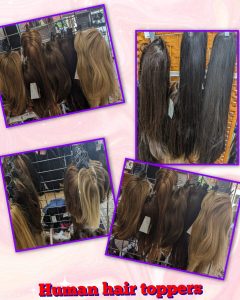
Human hair toppers provide natural movement and greater styling flexibility. They can often be curled, straightened, or styled to blend with your existing hair, making them a good option for someone who enjoys changing their hairstyle.
Synthetic toppers are generally easier to maintain because they hold their original style after washing. They come in many colors and textures, including gray shades, which can be especially helpful for matching naturally graying hair.
Some toppers also feature lace construction to create a more natural-looking part or scalp appearance.
The right choice depends on how much maintenance you prefer, the look you want to achieve, and your budget. For a closer look at the differences between these materials, check out our blog on human hair vs. synthetic wigs.
Finding the Right Size and Color
One of the most important parts of choosing a topper is finding the right size. Hair toppers are available in different base sizes to accommodate varying amounts of thinning.
A smaller topper may be enough to add volume around a narrow part, while a larger piece may provide better coverage for a wider area of hair loss.
Color matching is equally important. Because a topper blends with your natural hair, choosing a shade that closely matches your existing color can help create a more seamless appearance.
Texture and length also matter. A topper that complements your natural hairstyle will generally be easier to blend and maintain.
Trying on different options with professional guidance can help you find the right combination of coverage, fit, and appearance. Similar to a private wig fitting, personalized assistance can make it easier to compare styles and find a hairpiece that feels comfortable and natural.
How to Wear and Care for a Hair Topper
Once you find the right topper, learning how to put it on and care for it can make everyday wear much easier.
A properly positioned topper should sit comfortably and blend naturally with your existing hair. When attaching it, make sure the clips are secure without pulling too tightly on your hair or scalp. Repeated tension on fragile hair can contribute to breakage, so proper placement is important.
You should also follow the recommended care instructions for your specific topper. Human hair and synthetic hairpieces require different washing and styling products. Using appropriate hairpiece and wig care accessories, such as specialized shampoos, conditioning sprays, and storage stands, can help maintain their appearance.
With proper care and occasional styling adjustments, you can help extend the life of your topper while keeping it looking fresh and natural.
Find the Right Hair Topper for Your Needs
If you are experiencing thinning hair but are not ready for a full wig, a topper may be the solution you are looking for. The right hairpiece can add coverage and volume while allowing you to continue wearing your natural hair.
At Linda’s Headquarters, we offer a wide selection of human hair, synthetic, and lace toppers in different sizes, styles, and colors. Our knowledgeable team can help you explore a variety of hair toppers at our Skokie, IL, salon, conveniently located near Chicago. We can also help you find a suitable match and learn how to properly put on and wear your hairpiece. With personalized assistance and a comfortable, private setting, we aim to make the experience as easy and supportive as possible.
To learn more about our toppers or find the right hair loss solution for your needs, call (847) 679-0669 or complete our online contact form today.
Leave a Reply